Service
Emergency roof response
Urgent roof work has two jobs in sequence: stop water and reduce damage safely, then come back and rebuild the detail properly once conditions allow it to be done correctly.
Design concept imagery
Two phases
Stabilise, then repair
Treating those as one visit is what produces temporary work sold as permanent, or permanent work attempted in conditions that guarantee it will fail.
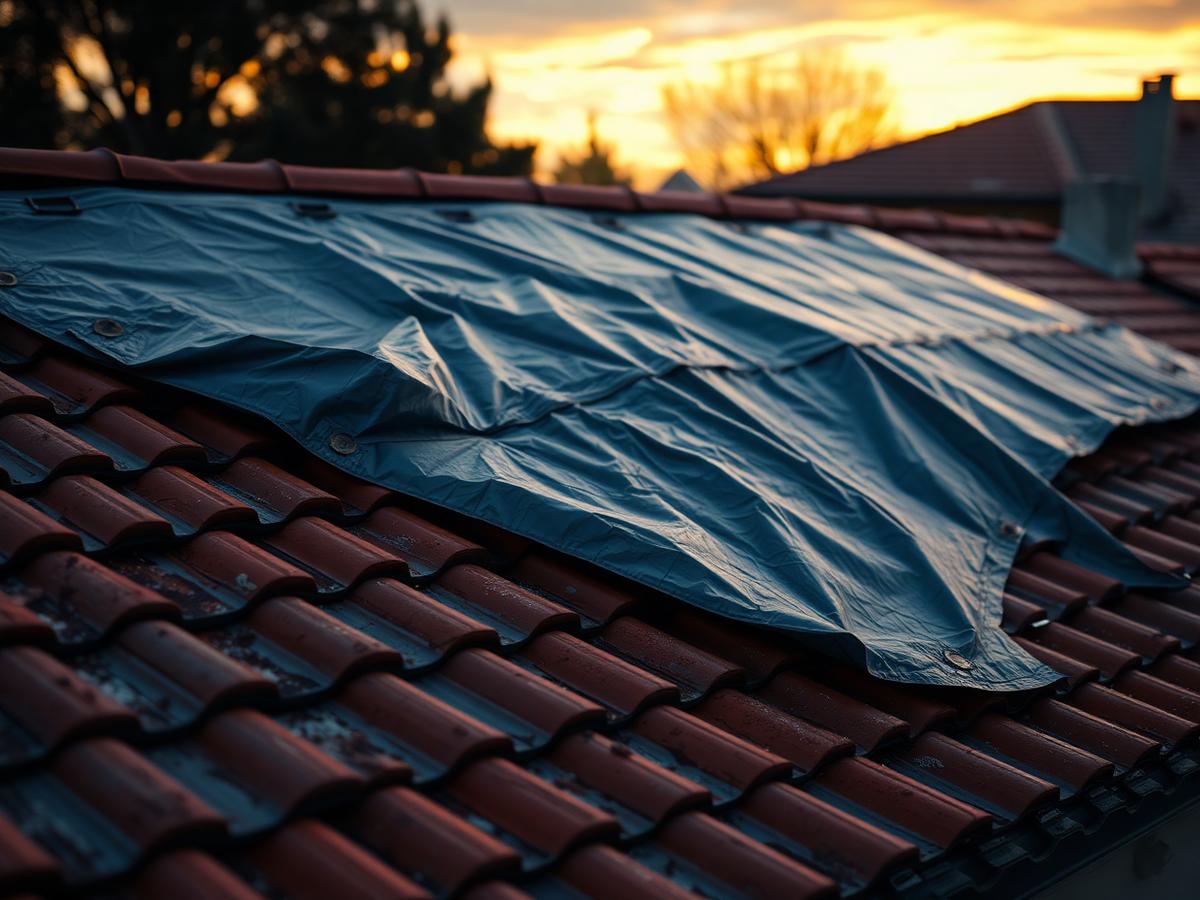
Phase one is triage. The priorities are occupant safety, stopping or diverting active water, and protecting what can still be protected — which sometimes means interior containment before anyone considers going up at all. Temporary covering is placed based on where water will travel once the surface is covered, not simply over the most obvious opening.
Phase two is the actual repair, scoped from what phase one revealed. Adhesives and sealants need dry, workable surfaces; wet sheathing needs time or replacement; and some components have to be ordered. A stabilisation that buys a week of dryness is a successful outcome, not a failure to finish.
Documentation runs through both phases. Photographs before covering, notes on what was placed and where, and a record of interior conditions matter later — for planning, and for any conversation you may have with your own insurer, which is a conversation you hold, not us.
Safety comes before the roof
No bookings on this site
No response-time claims
While you wait
Safe interior steps
All from inside, all reversible. None of these require going onto the roof.
| Step | Why it helps |
|---|---|
| Clear the area | Moving furniture, rugs, and electronics limits secondary damage that often exceeds the roof repair itself. |
| Contain the drip | A bucket and a towel line keeps water off flooring and prevents it spreading into adjacent rooms. |
| Treat water near electrics as a hazard | Stop using the affected circuit and keep clear until it can be checked by a qualified electrician. |
| Relieve a bulging ceiling only if advised | Trapped water can bring down a large area at once; this is a judgement call, not a default action. |
| Photograph everything, with times | A dated visual record of conditions is far more useful later than a memory of how bad it was. |
| Note the weather | Wind direction and rain intensity at the time of entry narrows the search for the entry point. |
| Stay off the roof | Wet surfaces, brittle tile, and compromised decking are the most common cause of serious injury in these situations. |
Questions
Emergency response FAQ
› What counts as an emergency versus an urgent repair?
Active water entering occupied space, a covering that has come off and left underlayment or deck exposed, or anything creating a structural or electrical hazard is emergency territory. A slow stain that has been there for weeks is urgent but not usually an after-hours event, and treating it as one rarely produces better work.
› Why is temporary stabilisation separate from the repair?
Stabilisation is about stopping water and reducing further damage as quickly as safely possible, often in poor conditions. The permanent detail needs dry surfaces, correct materials, and sometimes ordered parts. Combining both into one rushed visit usually compromises the second.
› What should I do before anyone arrives?
Work only from inside and only where it is safe: move belongings out of the wet area, contain drips into buckets, and if water is near light fixtures or outlets, stop using that circuit and treat it as an electrical hazard. Photograph and time-stamp what you see. Do not climb onto a wet roof.
› Can a tarp make things worse?
A poorly placed tarp can, by channelling water to a new place or by adding fasteners in the wrong locations. Placement is a decision about where water will go once the surface is covered, which is why it should follow at least a quick read of the roof rather than being thrown over the visible hole.
› How is emergency work handled during a storm?
Access during active high wind or lightning is unsafe and is not attempted. In a widespread event, response is inevitably queued by severity and by what conditions allow. Any site promising an exact arrival time during a storm is describing something it cannot control.
Planning roof work?
Useful notes to gather first: roof age if known, covering type, where any staining appears, and what weather brings it on. Contact details for this site are still being finalised; until then the assistant answers informational questions only.